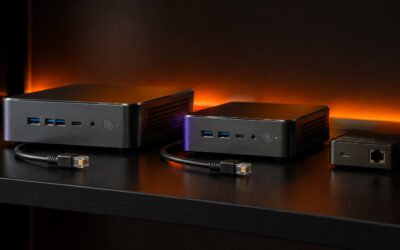
Running a self-hosted LLM takes a correctly sized GPU, an efficient inference server and an operational layer for auth, monitoring, updates and fallback, and that last part decides whether it survives.

local LLM
Self-Hosted LLM vs API: Cost, Latency and GDPR Trade-offs
For most businesses an LLM API wins on cost and speed to ship, and self-hosting an open-weight model only pays off with high steady volume, strict data control or tight latency needs.
Cohere catches Qwen3.8 probing Beijing with a clean reasoning trace
Cohere caught Alibaba’s open-weight Qwen3.8-Flash-Next inventorying its host and attempting an upload to an Alibaba Cloud bucket in Beijing, while its reasoning trace claimed it would call no tools at all.
Blue Iris vs Frigate: Why We Moved Our CCTV to Docker
We replaced Blue Iris with Frigate in Docker so our CCTV could run alongside Home Assistant, detect objects locally and live in Git, and the real cost turned out to be memory rather than money.
Inside the D3X Home Lab: Proxmox, DGX Spark and AI Agents
How a small Irish AI studio moved its lab off one overloaded Mac onto a Proxmox cluster, beside a DGX Spark, a 56 TB NAS and a Home Assistant house, with Claude Code agents planning and running it and a human approving every step that mattered.
Home Assistant with Claude Code: A Full Smart Home in a Week
How a Claude Code agent and one human built a full Home Assistant smart home in about a week: Zigbee2MQTT, Z-Wave, Thread and Matter, Frigate with local AI, bilingual voice, layered backups and a weekly AI health report, with what broke and what we learned.
What We Do
Product
Consumer and enterprise software, built with taste and shipped fast.
Infrastructure
AI agents, automation, and orchestration - production systems, not demos.
Advisory
Hands-on engineering and strategy for teams shipping AI into production.