Whatever the final shape of OpenAI’s hyperscaler deals, a capital-constrained lab that needs compute from everyone gives enterprise buyers leverage, so price your alternative cloud before your next renewal.

AI Infrastructure
Self-Hosted LLM on Your Own GPU Box: What It Really Takes
Running a self-hosted LLM takes a correctly sized GPU, an efficient inference server and an operational layer for auth, monitoring, updates and fallback, and that last part decides whether it survives.
Self-Hosted LLM vs API: Cost, Latency and GDPR Trade-offs
For most businesses an LLM API wins on cost and speed to ship, and self-hosting an open-weight model only pays off with high steady volume, strict data control or tight latency needs.
Intel falls 28.6% as Nasdaq slides 7.8% from peak on AI spend fears
Markets just showed they will punish AI spending that can’t show a return, and that pressure will reach every AI budget conversation this quarter.
Blue Iris vs Frigate: Why We Moved Our CCTV to Docker
We replaced Blue Iris with Frigate in Docker so our CCTV could run alongside Home Assistant, detect objects locally and live in Git, and the real cost turned out to be memory rather than money.
AAIF reaches 10 projects as four labs open-source the agent stack
Anthropic, OpenAI, Hugging Face and Alibaba have each handed a core piece of agent infrastructure to the Agentic AI Foundation, and the layer beneath the model is starting to look like a set of open standards.
Modal raises $750M at $15.75B as run rate tops $1B: what it signals
Modal’s $750M Series D and claimed $1B+ run rate suggest the unglamorous layer where AI workloads actually execute is now one of the biggest line items in production AI.
Microsoft finishes MAI-Base-2: a 2.8T in-house model bound for Foundry
Microsoft has finished pre-training a 2.8-trillion-parameter model built without OpenAI, so Azure builders should stop assuming one model supplier and make their stack swappable.
Apple’s Minions turns idle Macs into a GPU inference pool
Apple’s researchers have published Minions, a system that schedules inference jobs onto idle Apple Silicon Macs, and the interesting part is the orchestration, not the hardware.
Google’s Suncatcher TPUs reach orbit; cooling is the real limit
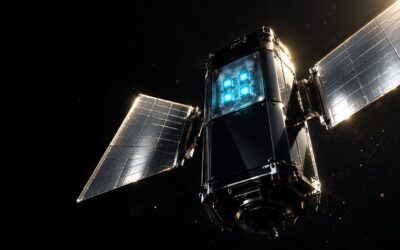
Google has four production TPUs in low Earth orbit, and the forced power-downs show that heat rejection, not radiation, is the limit on orbital AI compute.
What We Do
Product
Consumer and enterprise software, built with taste and shipped fast.
Infrastructure
AI agents, automation, and orchestration - production systems, not demos.
Advisory
Hands-on engineering and strategy for teams shipping AI into production.